
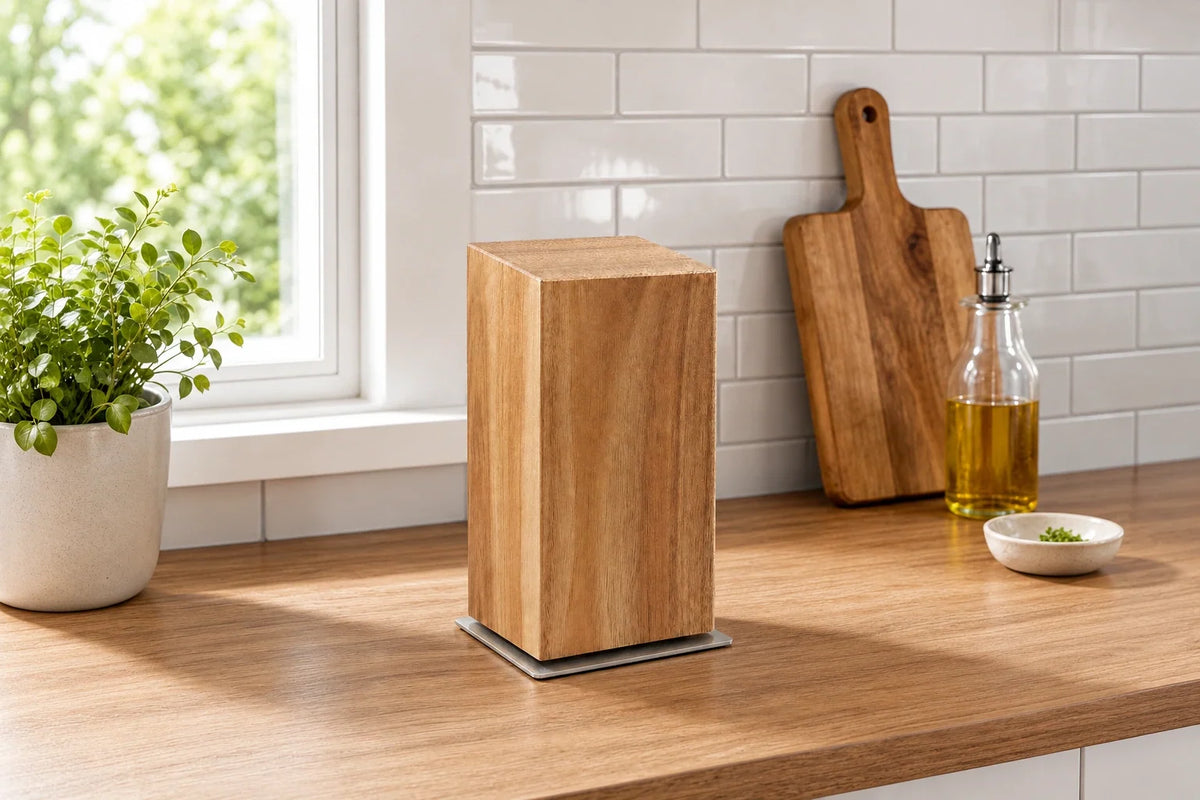
Comparing a rotating vs magnetic knife block means comparing how the storage will occupy and use the worktop. Both formats can place knives on display, but a rotating design needs room for its movement. A static double-sided design still needs usable access to the sides you intend to use.
The Rotating Magnetic Knife Block lists four-sided magnetic storage and a 360-degree rotating base. Begin with where that movement could happen without competing with the board, nearby appliances or other objects.
Distinguish the base from the working area
KIRU lists a 15 cm base width, 13 cm wood width and 27 cm total height for the rotating block. Those measurements describe the product. The usable area around it must also account for the knives you intend to place there and the access you need.
Do not reserve only the base footprint and assume the whole arrangement will fit. Consider a longer knife on one side, a nearby cupboard and the position of a receiving bowl during preparation. The exact collection changes how the storage occupies the space.
You can assess that location with an outline of the base and the tools' actual dimensions before choosing. Keep the exercise about your own arrangement rather than converting the four sides into an invented capacity.
If you intend to organise regularly used tools on one face and other preparation roles on another, consider how you will access each group. The rotating feature should answer that arrangement. If the groups already have a convenient fixed position, a static format may be the more relevant comparison.
Compare the static alternative
The Magnetic Knife Block lists a double-sided format, 23.5 cm width, 10 cm base depth and 25 cm height. Its wider, static presentation asks a different question: whether both intended storage faces will remain accessible in the proposed position.
A location against other objects may limit how conveniently you can use one face. Likewise, placing the block in the middle of a valuable preparation area can make an attractive storage format inconvenient during a meal. Think about the layout while the kitchen is active.
The two products both list acacia wood, while the rotating model also lists a stainless-steel base. Compare those material presentations once you know which arrangement the worktop can accommodate. A shared wood name does not make the formats interchangeable.
Follow the route from storage to board
Imagine selecting the knife for an ordinary vegetable dish, using the preparation area and returning the tool after the session. Where does the storage sit in that routine? A rotation feature may be relevant if several sides will be used, but it should answer a real access preference.
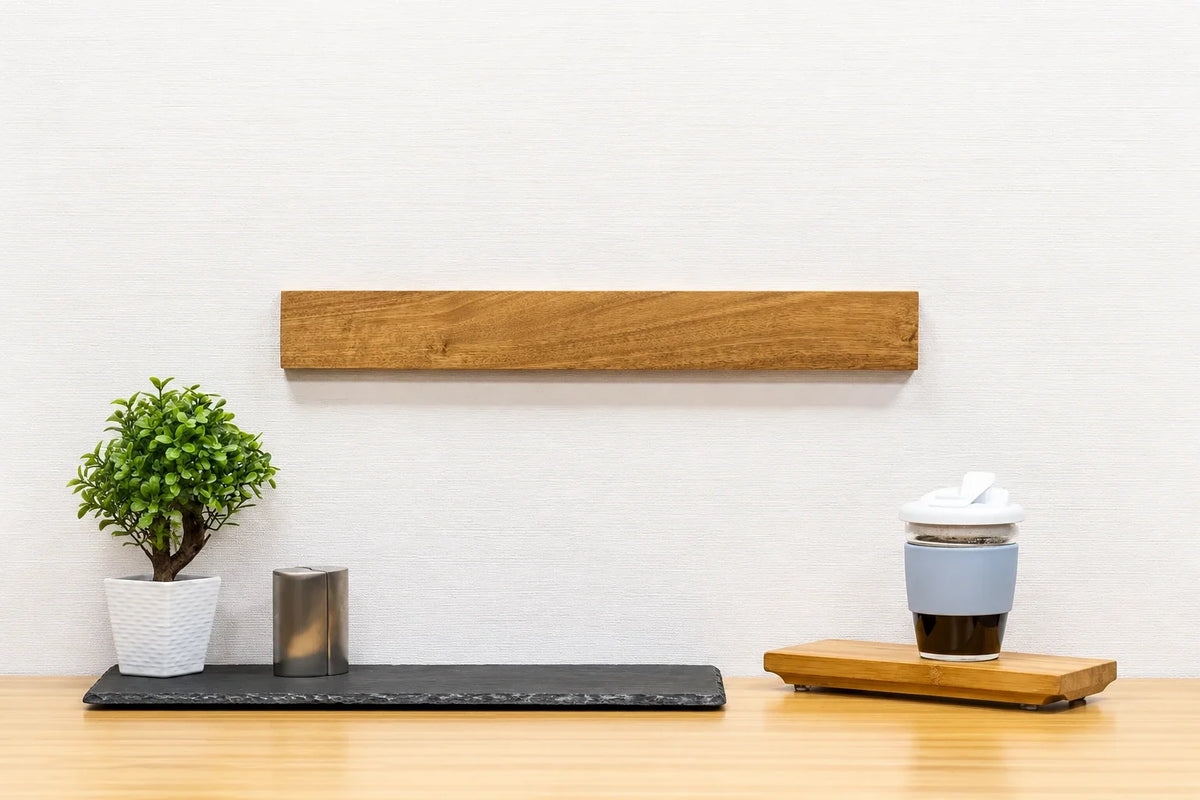
If neither format has a useful worktop location, revisit the broader placement question. Our strip and block comparison looks at wall-mounted storage alongside worktop formats, rather than expecting every kitchen to make room for the same setup.
Choose movement or a fixed arrangement deliberately
Choose the rotating format because its access method fits the space and the way you want to organise the tools. Choose a static double-sided format because its shape and intended faces have a clear position. The feature itself is not a reason to accept a crowded preparation area.
Explore KIRU Storage & Setup using measured locations and actual knife dimensions. The right comparison includes the base, the displayed tools and the room required to use the arrangement.

Leave a comment
This site is protected by hCaptcha and the hCaptcha Privacy Policy and Terms of Service apply.