
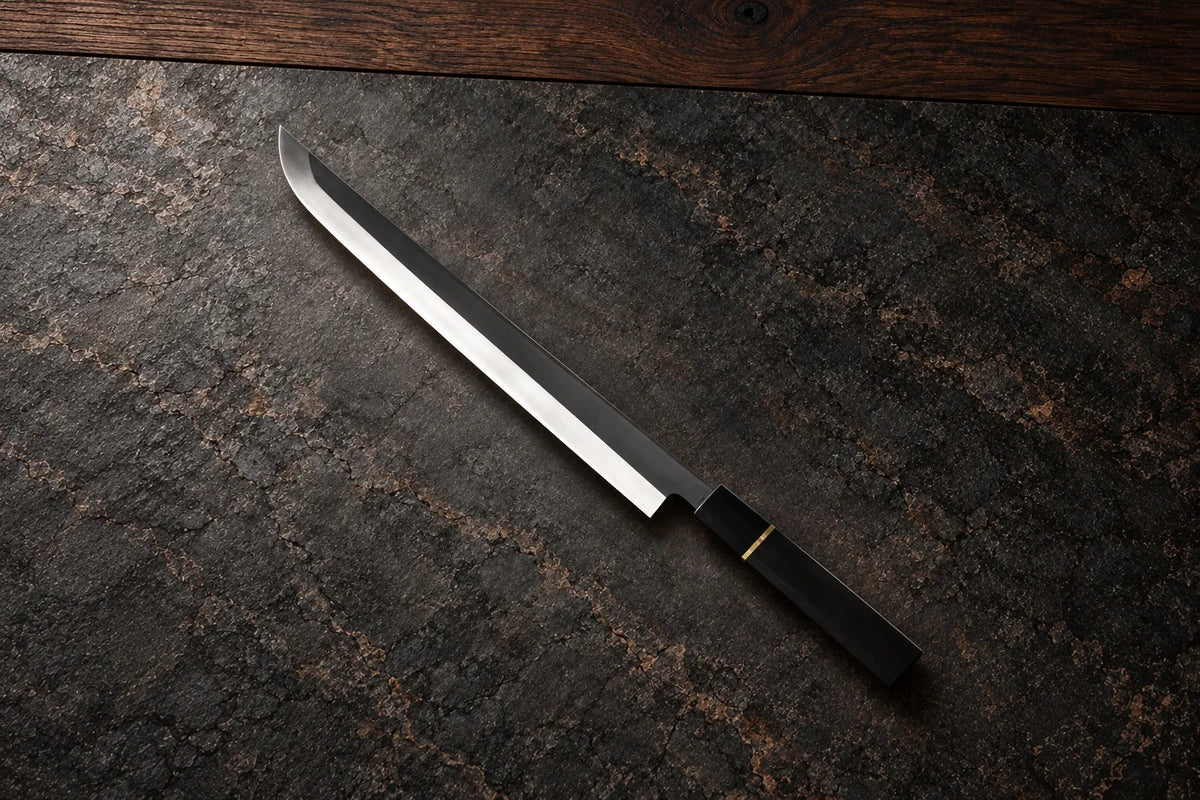
A sushi roll slicing knife should be considered for the finished, filled roll rather than selected only because the meal is called sushi. Preparing vegetable fillings, assembling the roll and dividing it for serving are separate jobs. Decide whether that final slicing stage is a recurring task before adding a dedicated profile.
The Ebony Sushi Knife explicitly includes sushi rolls in KIRU’s use description. Its published specification gives a 25–30 cm length range and a 3–4 mm thickness range. The length is a listed range, rather than a menu of selectable sizes.
Begin with the finished roll
For a cooked or vegetarian meal, picture the assembled roll as it will sit on the board. Its size and the portions you intend to serve define the final cutting task. These are more useful starting details than the total number of ingredients used earlier.
A filled roll brings several components together. The knife choice should therefore be assessed against the whole serving job, rather than assumed from the blade that felt convenient for one filling. You may already have a tool you find manageable for the task; a dedicated slicer should add a clear role.
Think about presentation as well. Portions arranged on a shared plate create a different serving layout from keeping the prepared food on the working board. Choose the receiving dish first so the final cutting area does not also have to become the entire table display.
Read dimensions as planning information
The Ebony model's published length range helps you consider the space a longer profile may require. It does not establish an exact delivered length for an individual knife. If a precise measurement determines your choice, clarify that detail before matching the knife to your setup.
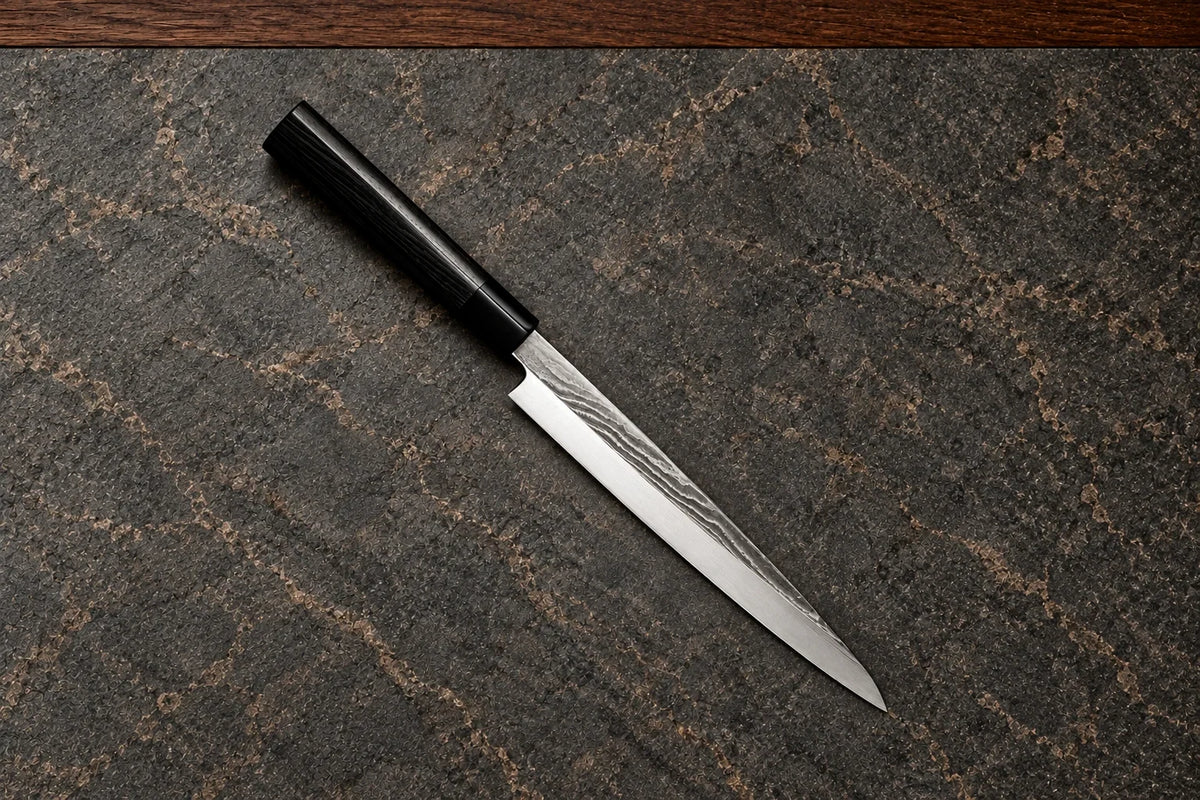
The Onyx Sushi Knife is described for fish slicing, with a listed 22.5 cm blade length. That stated role is distinct from Ebony’s explicit roll-preparation description; a shared collection name does not make their tasks interchangeable.
Neither a sushi title nor a yanagiba-style description should be expanded into an assumed bevel configuration. Keep that technical question separate from the straightforward decision about whether a dedicated slicing role fits the meals you prepare.
Leave room for the serving stage
The usable cutting area should accommodate the roll, the knife and the movement needed for the task. Remove the filling dishes that have finished their job, and place the serving plate where completed portions have a clear destination.
A long profile deserves consideration alongside the full board arrangement. The earlier guide to blade length and board space explains why a larger cutting tool cannot be assessed independently of the area where it will be used.
Do not let the final slicing stage inherit a crowded assembly station. Changing the workspace at that point is a purposeful part of preparation, even if you retain a knife already in your collection.
Choose for a repeated slicing need
A specialist addition is easier to justify when the final serving task appears regularly. If sushi meals are mostly bowls or formats without a filled-roll portioning stage, the more useful gap may remain ordinary vegetable preparation.
Browse the KIRU Sushi Knives when a dedicated slicing role is what you need. Compare the actual product, clarify any measurement that matters and plan its place at the board before choosing the finish.

Leave a comment
This site is protected by hCaptcha and the hCaptcha Privacy Policy and Terms of Service apply.