
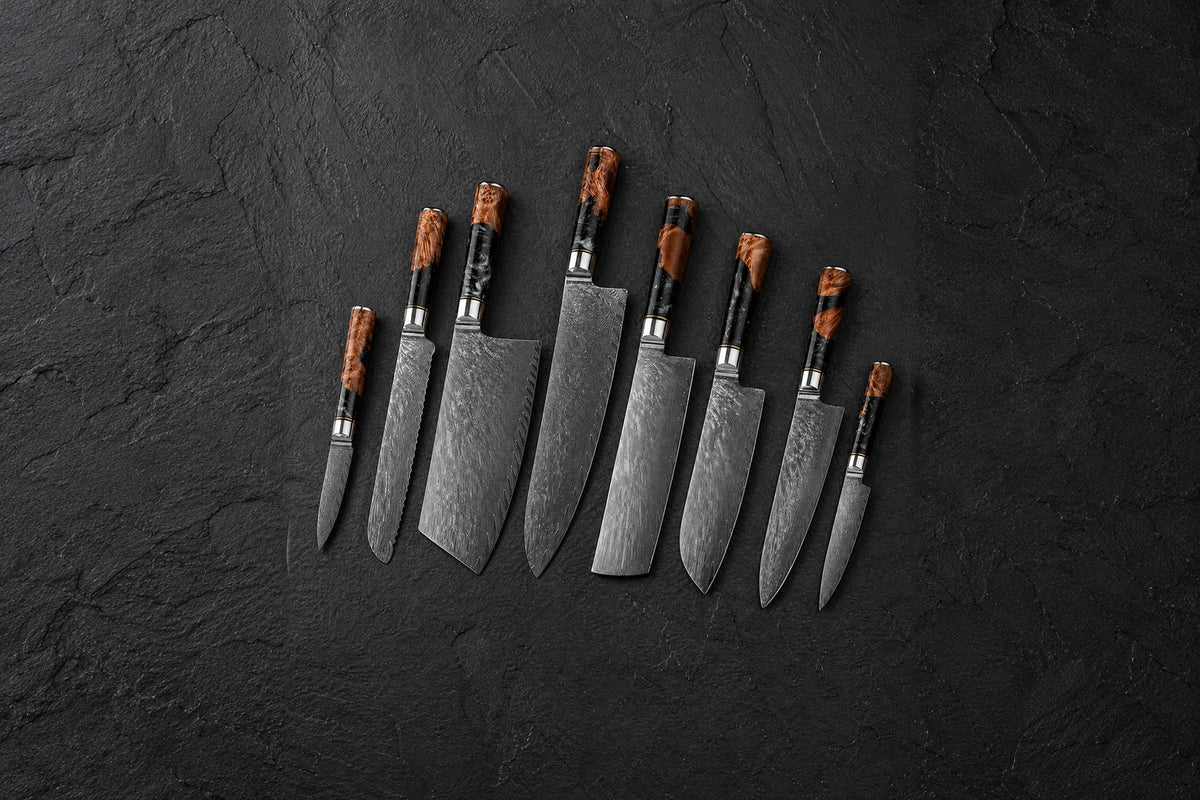
Choosing a knife for rice bowl vegetables begins with the cuts you want in the bowl. Cucumber slices, prepared carrot pieces and a small soft filling can involve different preparation roles. The Timber Series includes named paring, utility and Nakiri options, letting you compare specific blades instead of treating the range as one knife.
Start with the recipe or combination you plan to serve. A bowl built around fine vegetable pieces asks for a different preparation list from one arranged with broader slices and larger prepared portions.
Write the filling shapes before choosing the blade
For a simple vegetable bowl, you might want cucumber rounds, carrot pieces and a small soft prepared ingredient. Note the intended cut beside each item. If the recipe includes a cooked filling prepared elsewhere, keep its portioning job distinct from the vegetables rather than assuming they all need the same treatment.
The arrangement you like can be part of that choice. Some bowls are mixed together; others have ingredients placed in separate sections. Decide which you intend to make, then choose preparation shapes according to the recipe and your serving preference.
Compare smaller board roles
Timber offers a 3.5 inch Paring and 5 inch Utility option. Examine the smaller paring role for a short board-based portioning job, or the longer utility option when that is the role you want for the smaller ingredients. Keep the selected option name visible as you compare the current blade images.
The Azure Series also lists a 5 inch Utility, alongside other named profiles. Once the smaller preparation role is clear, you can compare the ranges specifically. Timber lists maple burl wood and high composite resin for its handle; Azure lists stabilised maple burl and resin.
Give repeated vegetable work its own place
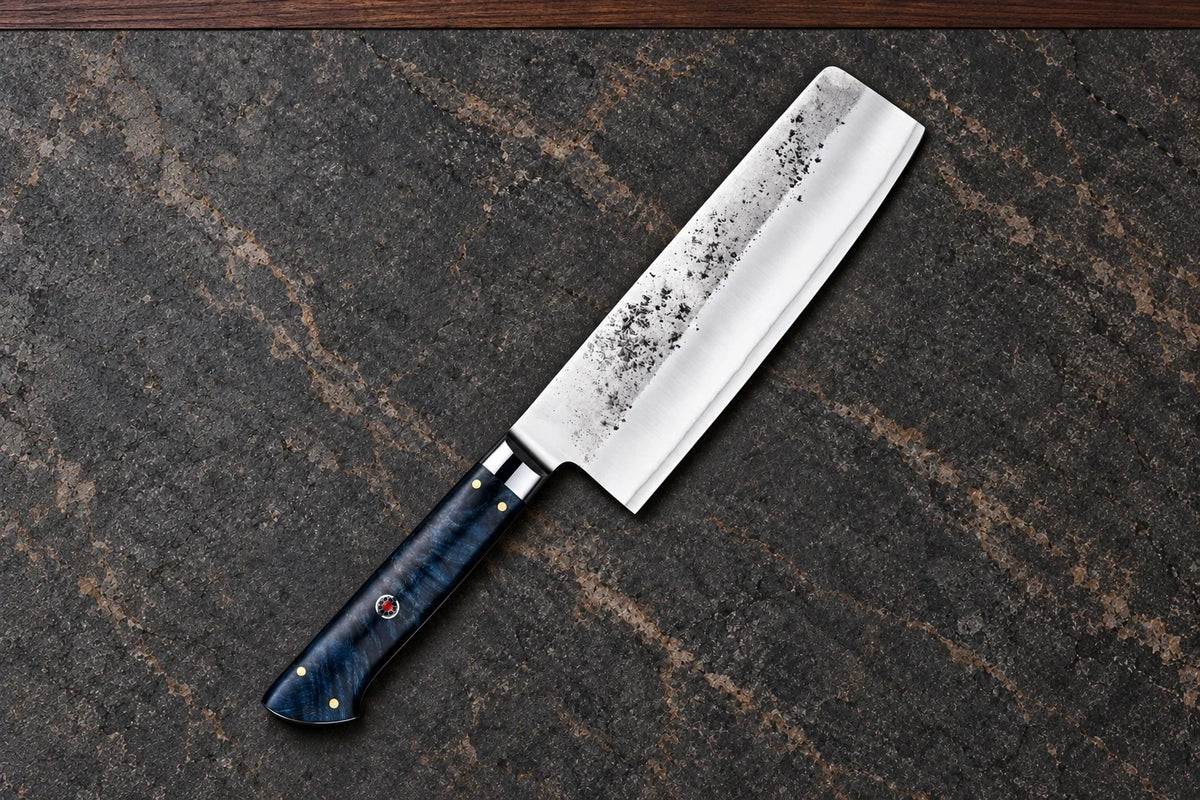
If vegetable fillings make up most of your recurring bowl preparation, a dedicated vegetable profile is another decision to consider. KIRU describes the Indigo Series Nakiri Knife as a tall, straight vegetable-oriented blade designed for push cuts, with a listed 7-inch, approximately 18cm blade.
For a modest lunch bowl, you may already have a main knife that covers the repeated vegetable work. For regular vegetable-heavy dinners, you might want that role to have a separate tool. Consider the amount and frequency of your own preparation rather than building a collection around one occasional meal.
For an arranged bowl, you might want cucumber rounds in one section and shorter carrot pieces in another. For a mixed bowl, your chosen recipe may favour smaller additions distributed through it. Write those shapes down rather than assuming that every rice-bowl filling should be sliced in the same way.
Organise ingredients around the final bowl
A small bowl meal may only need the board and serving bowl beside it. If the ingredients are arranged separately, modest prepared-ingredient dishes can help you plan the presentation you want. Choose the arrangement that fits the amount you make and the recipe’s order.
For two different bowls at the same meal, note which fillings are shared and which are individual preferences. Prepare the common vegetable jobs as a group in your written plan, then give the smaller additions their own place. This identifies the main knife role without adding a separate tool for every bowl.
Our utility and paring comparison explores the smaller-role choice. Browse the Knife Series with the intended filling cuts listed. Choose one relevant option first, then add another only when it has a distinct preparation job in your rice-bowl routine.


Leave a comment
This site is protected by hCaptcha and the hCaptcha Privacy Policy and Terms of Service apply.