
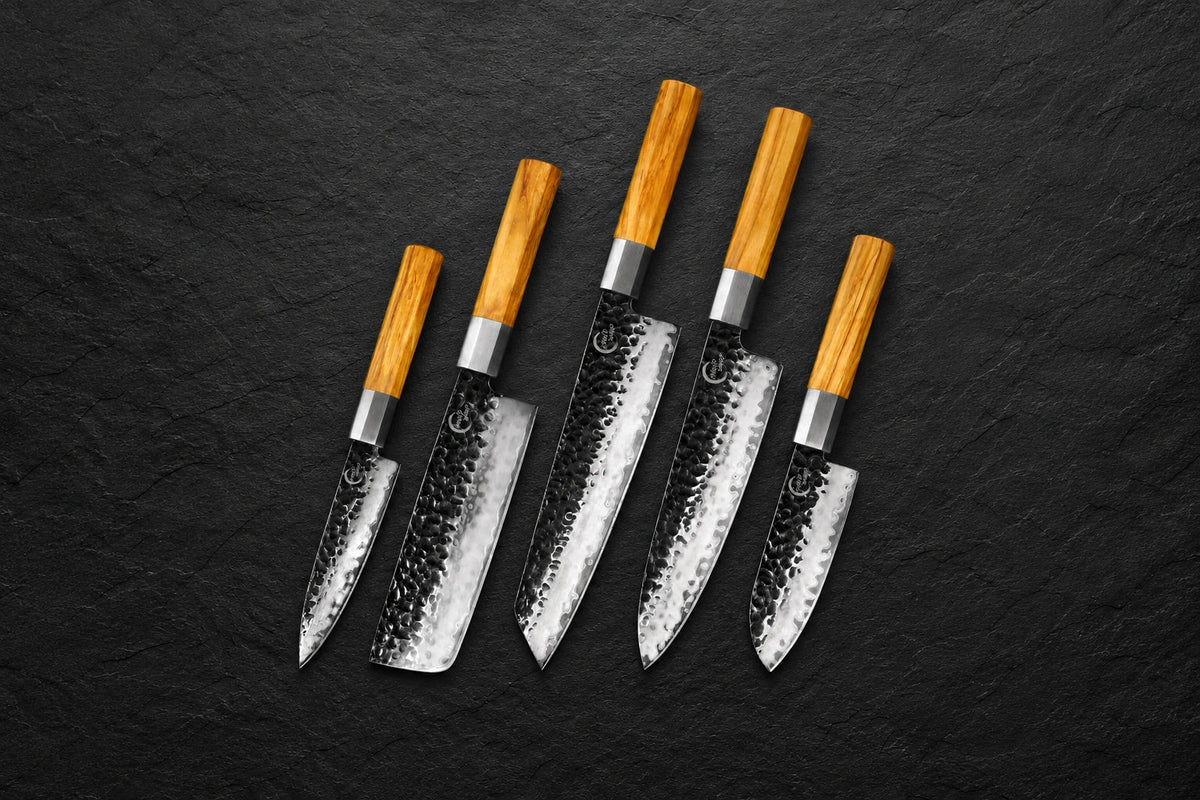
Choose a smaller knife set by identifying the jobs it needs to cover. Everyday board preparation, small ingredients and bread are useful roles to consider before looking at a piece count. The Kanso Series offers a coordinated five-piece set option, but the practical decision begins with your cooking habits and the knives you already use.
A compact collection can be considered without turning every profile into a compulsory purchase. The right starting point is a typical week in your kitchen.
Name the work you repeat
Write down three ordinary meals: perhaps vegetable pasta, a soup and a sandwich lunch. Under each, note the cutting jobs. Pasta might involve onions, courgettes and herbs. Soup might call for several vegetables in a particular dice. Sandwiches may involve bread and a smaller amount of tomato or cucumber.
This exercise shows the roles you return to, rather than the profiles that happen to look attractive together. If the same everyday blade already covers most board preparation, identify the task that remains awkward. That missing role is the most useful reason to add something.
Give the everyday blade a clear purpose
A chef or related broad preparation profile is a candidate for much of the board work in a mixed menu. Decide the size and format you prefer based on the space and ingredients you normally handle. The everyday role should feel distinct enough that you know why you reach for that knife.
For individual choices, the Harbor Series includes named chef, utility, paring, bread, Santoku and Nakiri options among its profiles. Its 8 inch Chef Knife and 9.5 inch Chef Knife are separate selections. Choosing between them is a blade-size decision; choosing both requires a reason in your own cooking routine.
Separate small prep from bread
A smaller blade can have a defined place for modest ingredients and close board tasks. Timber offers a 3.5 inch Paring and a 5 inch Utility, so compare the task you want to cover rather than treating those two names as interchangeable. If one small knife already suits your regular work, a second should add something you can explain.
Bread is a different role. The Timber Series includes a 7.5 Inch Bread option. If crusty loaves and rolls are frequent in your kitchen, give that task its own place in the plan. The distinction matters more than assembling a collection with the greatest possible number of similar straight blades.
Decide whether the set fits your role map
Once the roles are clear, compare them with the actual set contents and options. Kanso's choices include 5 Piece Set and 5 Piece Set with Wood Cover. Establish the specific profiles included before deciding that the set replaces the knives on your list.
You might find that a coordinated set fits a kitchen being equipped afresh. You might instead find that one individual profile complements an existing collection. Both decisions are valid when they answer the roles you have identified.
Include the storage space in the decision
A knife collection also occupies space. Plan a suitable home for the knives you intend to keep, alongside any existing tools. A purchase that duplicates a role may also consume space you would rather give to the working board or another daily item.
Our single knife and set guide helps with that broader choice. Browse KIRU knife sets once you know the required jobs. A smaller setup is most convincing when every included blade has an understandable place in the meals you actually make.


Leave a comment
This site is protected by hCaptcha and the hCaptcha Privacy Policy and Terms of Service apply.