
A knife for stir fry vegetables should suit the cuts you need, rather than the number of ingredients on the shopping list. Peppers in strips, courgettes in half-moons and smaller aromatics create different jobs. Decide those shapes first, then choose a main vegetable blade and add a smaller option only where it earns its place.
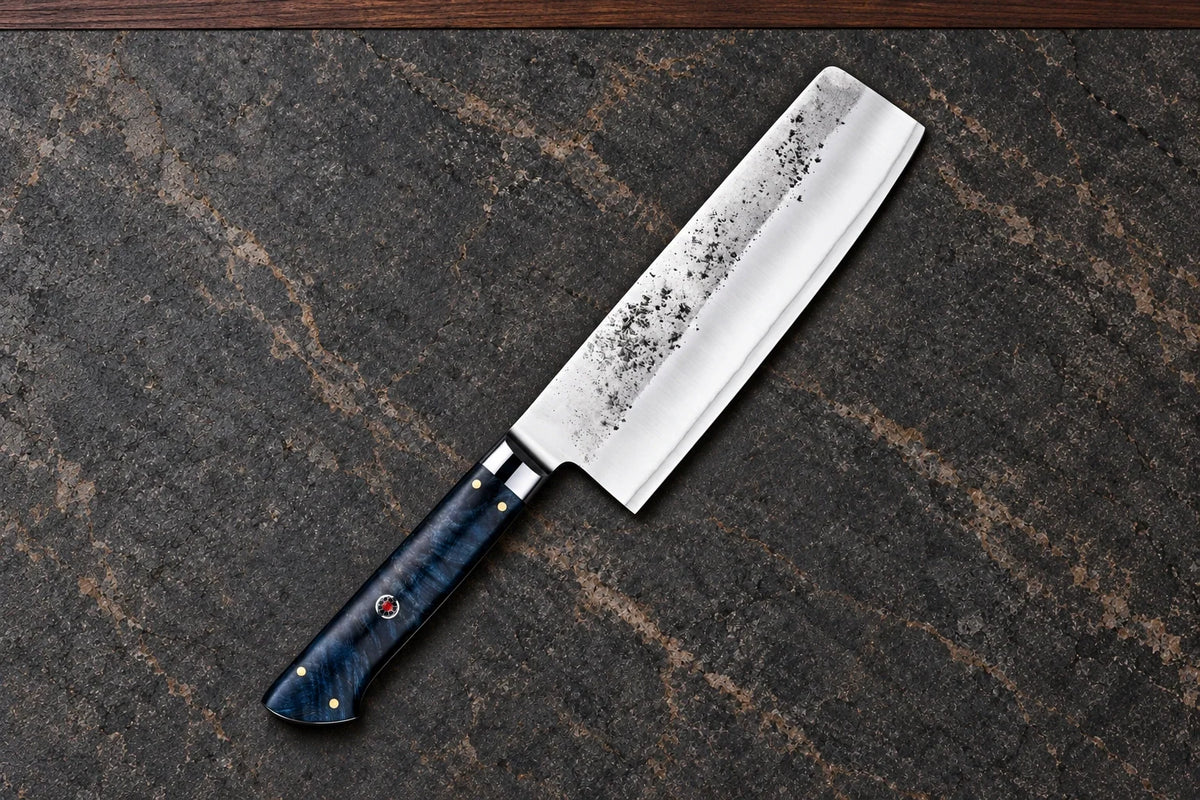
The Indigo Series — Nakiri Knife gives vegetable preparation a defined role. KIRU describes its tall, straight profile as intended for push-cuts. That makes it a useful starting point when the evening's work is primarily board-based vegetable slicing.
Turn the ingredient list into a cutting list
Read the recipe before setting out knives. Beside each vegetable, note the requested shape: slices, strips, small pieces or a rough chop. This prevents the common distraction of deciding how to cut each ingredient halfway through preparation, with everything already occupying the worktop.
For a pepper-and-courgette dinner, the main jobs might be longer pepper strips and repeated courgette slices. A garnish could need only a small quantity of finer pieces. These jobs can share a preparation area, but they do not need to sit on the board at the same time.
Consider quantity separately from shape. One pepper still requires enough room to arrange and portion it; a bowl of courgettes adds repetition. Neither fact automatically calls for a larger knife. The useful question is whether the chosen profile feels manageable for the intended cut and the space available.
Give the main blade a clear job
Use the Nakiri as the reference point for the repeated vegetable cuts you expect to make most often. Its role is different from choosing an entire matching range. The Indigo model is one named knife, while other KIRU series contain several selectable profiles.
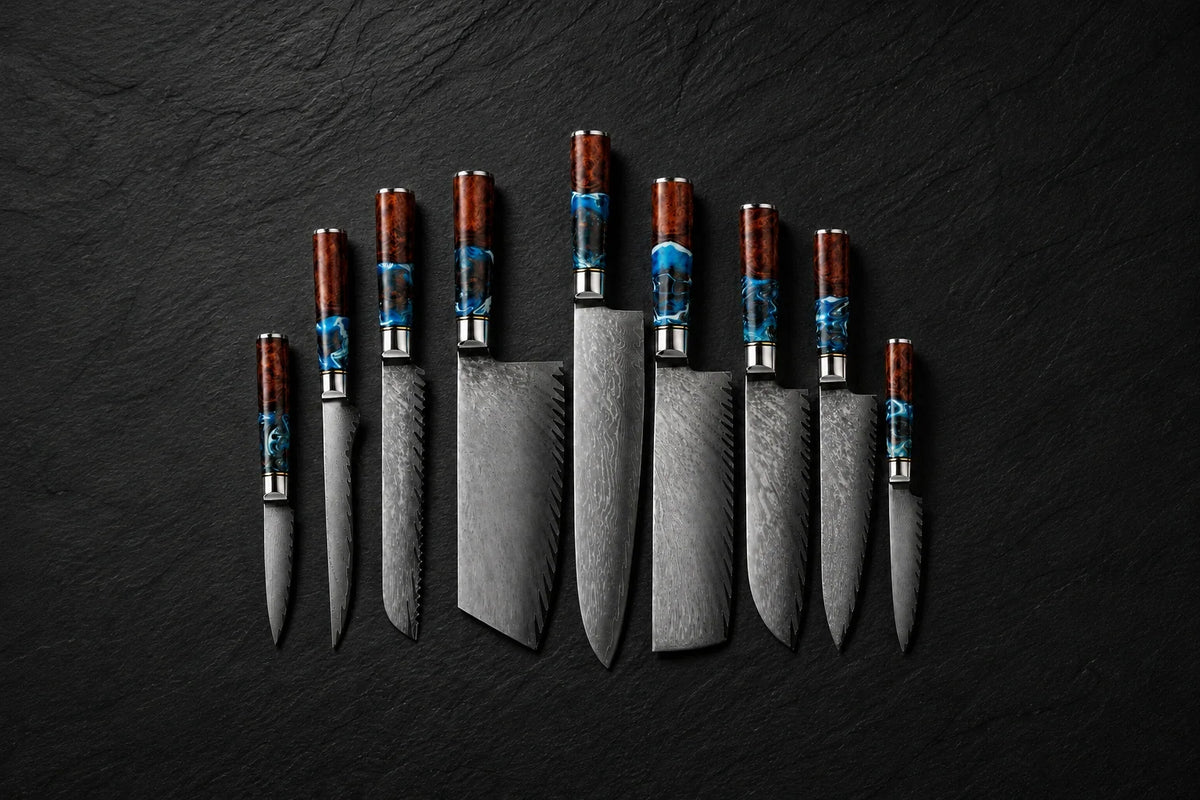
If mixed preparation is more typical in your kitchen, inspect the Harbor Series. Its options include a 7 inch Nakiri, a 7.5 inch Santoku and an 8 inch Chef Knife. Choose the actual option that answers your task; the series name alone does not determine the blade shape.
There is little value in placing all three beside the board for one vegetable dish. A useful arrangement gives the main knife a specific task, then leaves the remaining area for ingredients and receiving bowls. This is a decision about control and organisation, rather than matching every ingredient to a new tool.
Reserve a smaller option for smaller work
A compact detail job may justify a second knife. The Timber Series includes 3.5 inch Paring and 5 inch Utility options. Compare those roles if the recipe has modest trimming or a small quantity of ingredients that feels awkward beside a larger vegetable blade.
Keep the distinction practical: a smaller tool can have a defined place without becoming the default for every cut. If the main knife already handles the garnish comfortably, adding another item creates a storage and clearing-up job without answering a new preparation need.
Leave somewhere for each finished cut
Set out the bowls or dishes that will receive the prepared vegetables before starting. Move completed groups off the cutting area so the next ingredient has room. Organise the groups according to your recipe, without assuming that every vegetable needs the same dimensions or cooking treatment.
For a wider comparison, browse the KIRU Knife Series by named profile. The right stir-fry setup is a blade choice, a clear cutting area and a place for finished ingredients. Begin with those three decisions before expanding the collection.


Leave a comment
This site is protected by hCaptcha and the hCaptcha Privacy Policy and Terms of Service apply.