
To organise knives for batch prep, begin with the cutting area rather than setting out the largest possible tool selection. Several soup or side-dish ingredients can create a crowded station even when each individual job is straightforward. Give the active task room, and give its finished pieces somewhere else to go.
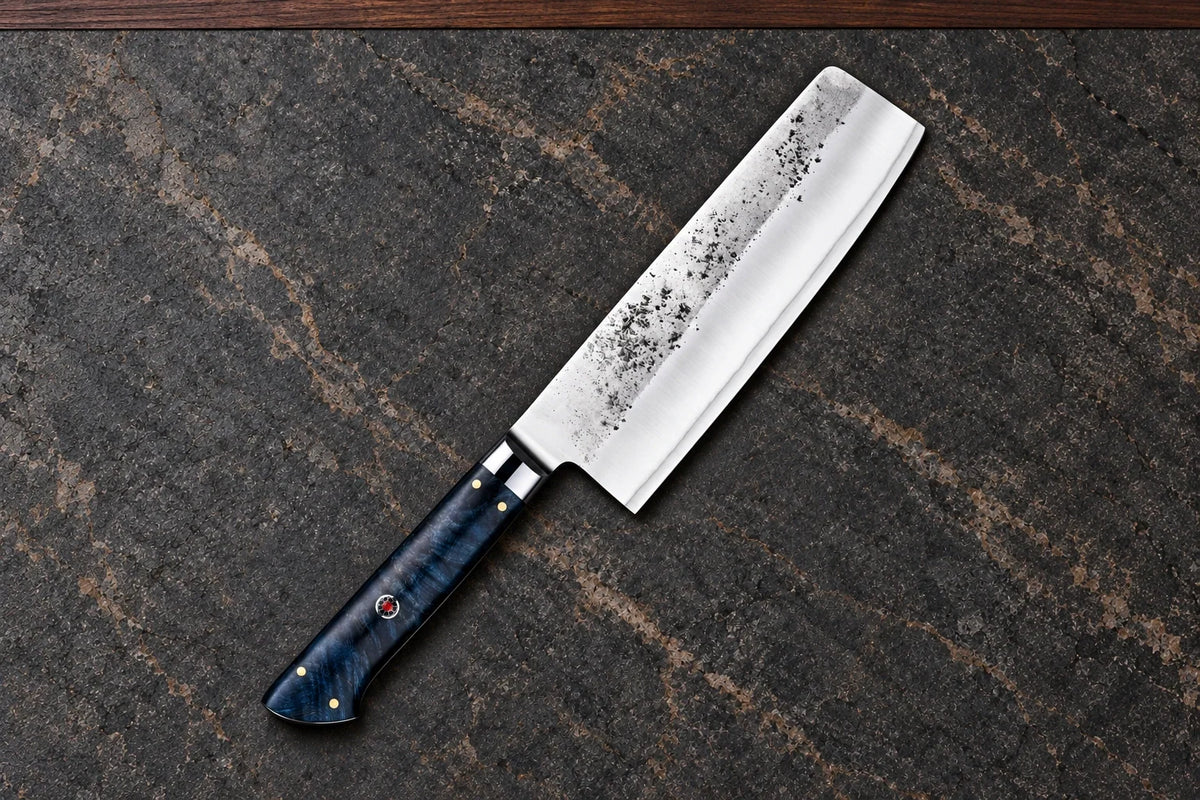
The Indigo Nakiri offers a vegetable-focused role, described by KIRU as a tall, straight profile intended for push-cuts. It provides a starting point for repeated ordinary vegetable work without making every ingredient a reason to add another knife.
Make a preparation list before filling the board
Ideal Home's September organising coverage connects an autumn kitchen reset with soup and batch-meal planning. A defined preparation area gives that idea a practical starting point.
List the recipe cuts and group them by job. A soup might ask for modest pieces of several vegetables, while a side calls for repeated slices. Keep those requirements visible so the board does not become a place to decide every task from scratch.
Separate the amount to prepare from the amount that fits comfortably in the cutting area. A larger recipe does not require every ingredient to be present on the board simultaneously. The preparation list can remain large while each active job stays clearly defined.
Assign a destination to finished pieces
Choose the receiving bowls or dishes before starting. Assign them according to the recipe so completed cuts have an obvious destination. This is a workspace decision, rather than an instruction about how long to keep prepared food or how to store the finished meals.
Move completed groups away from the cutting area before bringing the next job into that space. A bowl of finished pieces should not occupy the room required for the ingredient still being prepared. Think of the board as the active station, with other containers doing the holding and organising work.
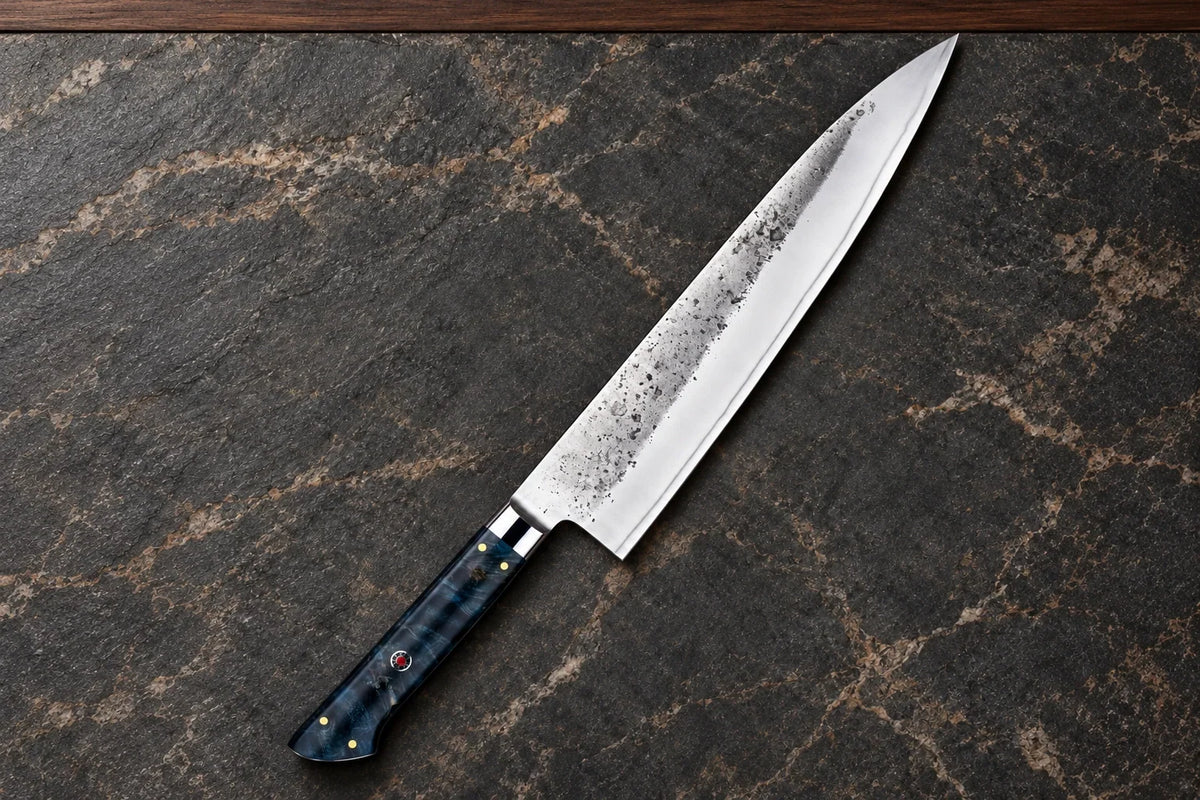
If a small detail task genuinely needs a different blade, the Timber Series includes a 5 inch Utility option. Give that addition a defined job rather than laying out several knives simply because the recipe has several components.
A separate dish for a garnish can also keep its smaller preparation job from spreading into the area reserved for the main vegetables.
Keep stored tools separate from active tools
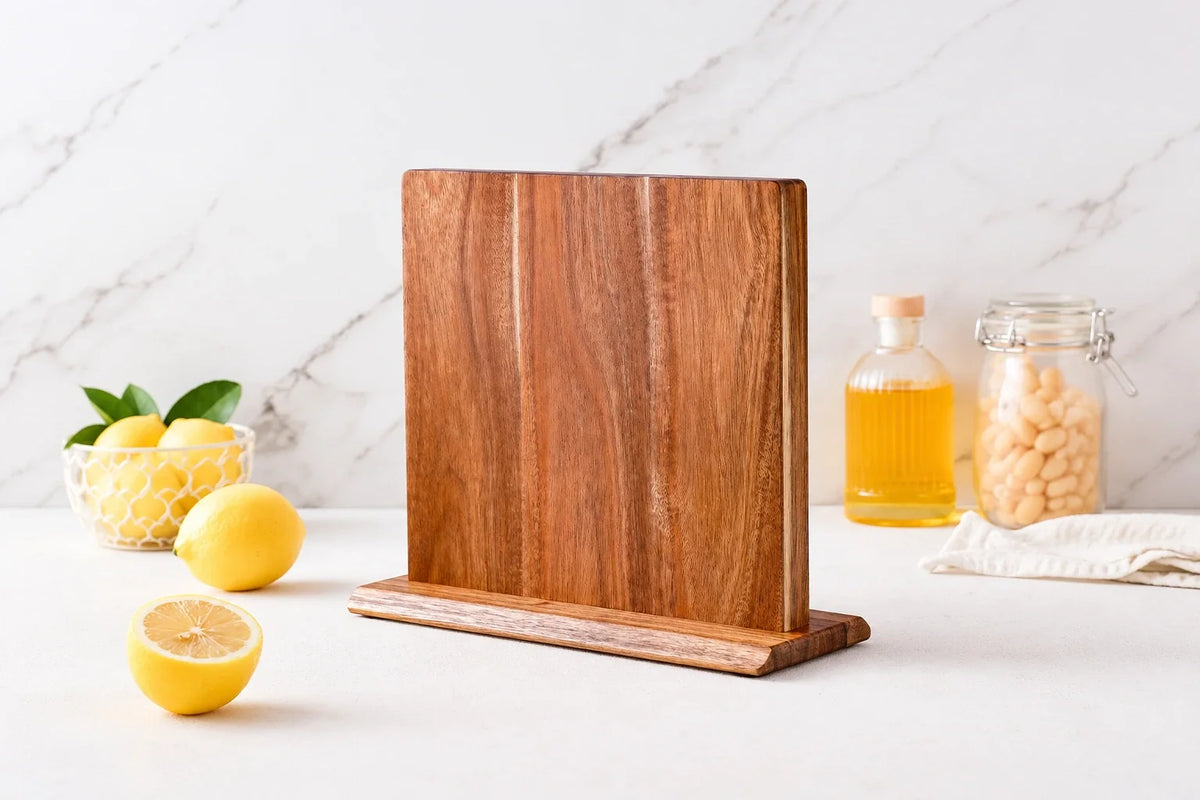
A clear station also has a place for the knives that are not currently being used. The Acacia Wood Knife Block offers a listed multi-hole storage format. Its role in the setup should be considered alongside actual tool fit and the space available for permanent storage.
Storage is not a substitute for a receiving bowl, and the cutting board should not become temporary storage for every tool. Giving each item one job makes the arrangement easier to understand as the recipe progresses.
Our knife-storage placement guide explores the location question in more detail. It is useful when stored tools and ingredient dishes are repeatedly competing for the same patch of worktop.
Repeat the arrangement, not the clutter
After one preparation session, notice which parts of the layout had a clear purpose. Keep the board position, receiving dishes and main knife role that served the tasks, then reconsider items that had no active place.
Browse the KIRU Knife Series for the preparation role you repeat. A purposeful batch setup is built around task order, a usable cutting area and destinations for finished cuts, rather than a larger number of tools.

Leave a comment
This site is protected by hCaptcha and the hCaptcha Privacy Policy and Terms of Service apply.