
How to care for kitchen knives begins with finishing the preparation session deliberately. The final job is not choosing another blade: it is completing the care steps for the tool you used and returning it to an appropriate place. Give that stage a clear role in the kitchen routine.
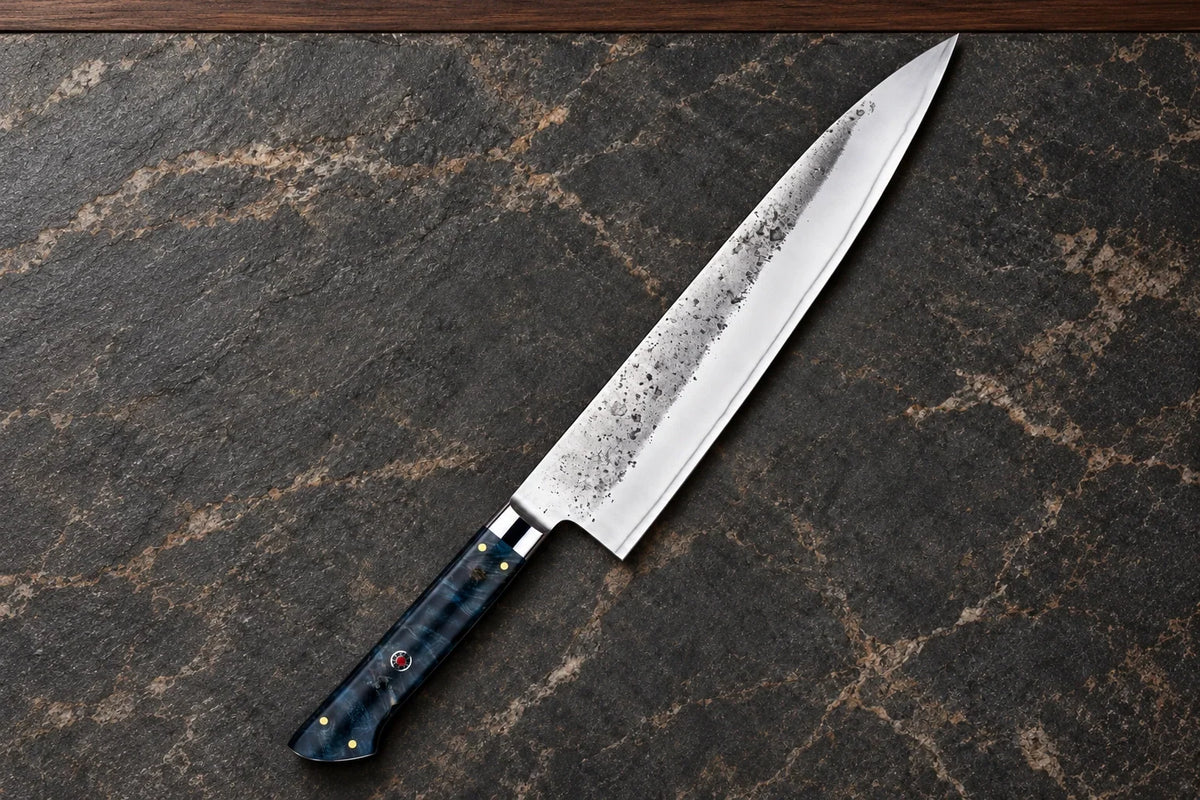
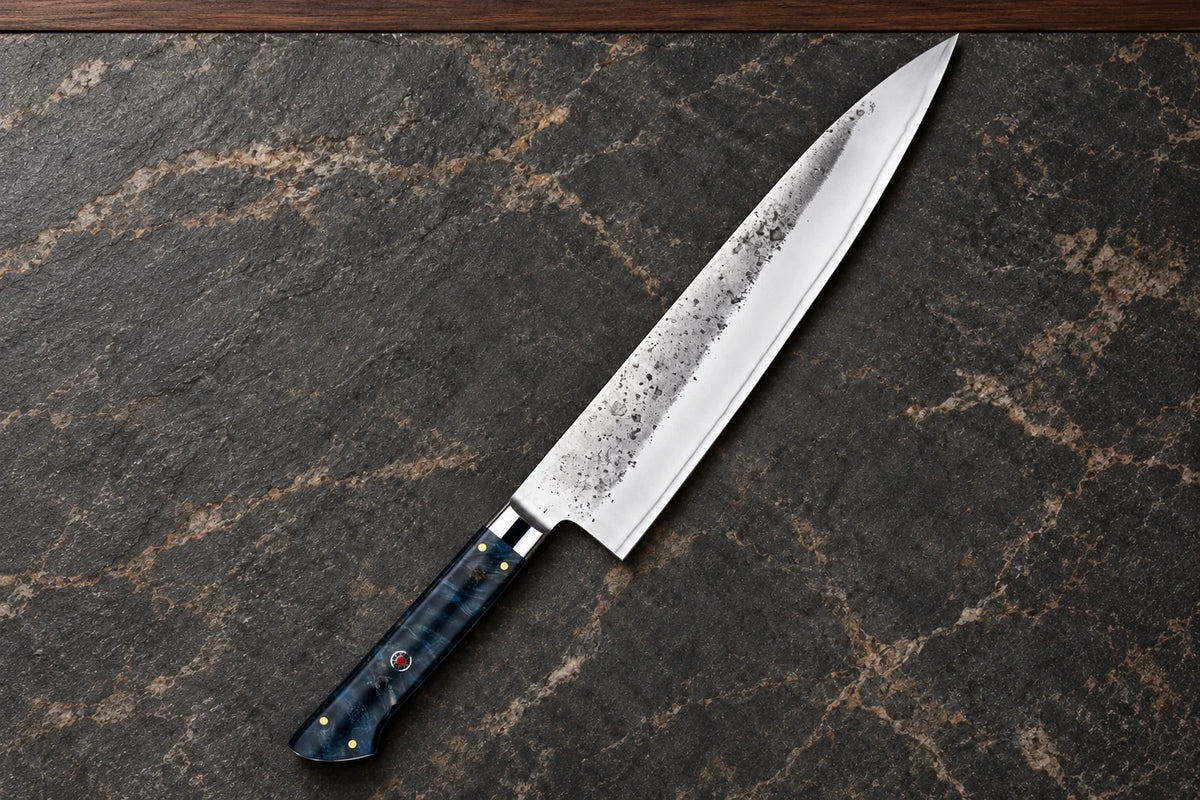
The Indigo Gyuto is a useful example of a main preparation tool. KIRU lists a stabilised wood handle and a three-layer composite blade with a 10Cr15CoMoV core. Those product details belong to this model; they are not a complete care manual.
Begin with the directions for your tool
Robert Welch's general knife-care guidance recommends hand washing, avoiding soaking, drying promptly and separated storage. For a KIRU knife, follow its supplied care instructions.
Keep those two sources of guidance distinct. General advice can help you think about the end of preparation, while the particular tool's directions address its materials and construction. If the instructions you need are unclear, obtain them rather than assume that another manufacturer's complete procedure applies.
A knife described by its steel or handle material should not automatically be assigned a cleaning appliance, treatment product or maintenance interval. The practical aim is to understand the routine for the actual item you own, instead of turning a material label into instructions.
Plan the destination before the session ends
Storage deserves the same attention as the active preparation area. Decide where the knife will return once its care steps are complete, and make that location part of the ordinary arrangement. An item without a defined home can end up competing with the tools needed for the next meal.
The Acacia Wood Knife Block offers a multi-hole layout for knives and scissors. Compare the actual profile and handle fit, along with the location you can reserve for the block. Its published dimensions help assess the product, but they do not establish universal compatibility.
The Wooden Knife Rack is a horizontal alternative, listed for a drawer or worktop. A suitable arrangement depends on the tools, the selected rack option and the available space together.
If the intended home is in a drawer, include its usable interior and the actual tool fit in the decision. A storage destination is most useful when it is already understood before preparation begins.
Keep the end-of-prep area organised
Think about what remains on the worktop when the food has moved to its next recipe stage. The board, receiving dishes and unused tools have different destinations. Clearing that arrangement is easier to plan when each item had a defined purpose from the start.
The knife's return should not depend on moving a storage product into place after every meal. Reserve the home for it as part of the kitchen layout. If the storage location is repeatedly occupied by other objects, the location itself may need reconsidering.
Our drawer and worktop rack guide considers that placement question. Use it to compare the actual available areas rather than asking one format to work wherever there happens to be room.
Separate routine care from other decisions
Choosing an edge-maintenance tool is another decision, with its own product requirements and instructions. It need not become an improvised extra step at the end of every preparation session. Keep the ordinary finishing routine clear before considering a separate sharpening purchase.
Explore KIRU Storage & Setup for a lasting home for the tools you own. A considered finish to preparation combines the particular knife's care instructions with a storage arrangement that has a clear place in your kitchen.


Leave a comment
This site is protected by hCaptcha and the hCaptcha Privacy Policy and Terms of Service apply.