
A knife for chopping mushrooms should answer the scale and shape of your preparation. If the job is a handful of modest slices or small board-based trims, a utility-sized option is worth considering. A larger batch may justify comparing a broader preparation role, but the ingredient name alone does not decide the blade.
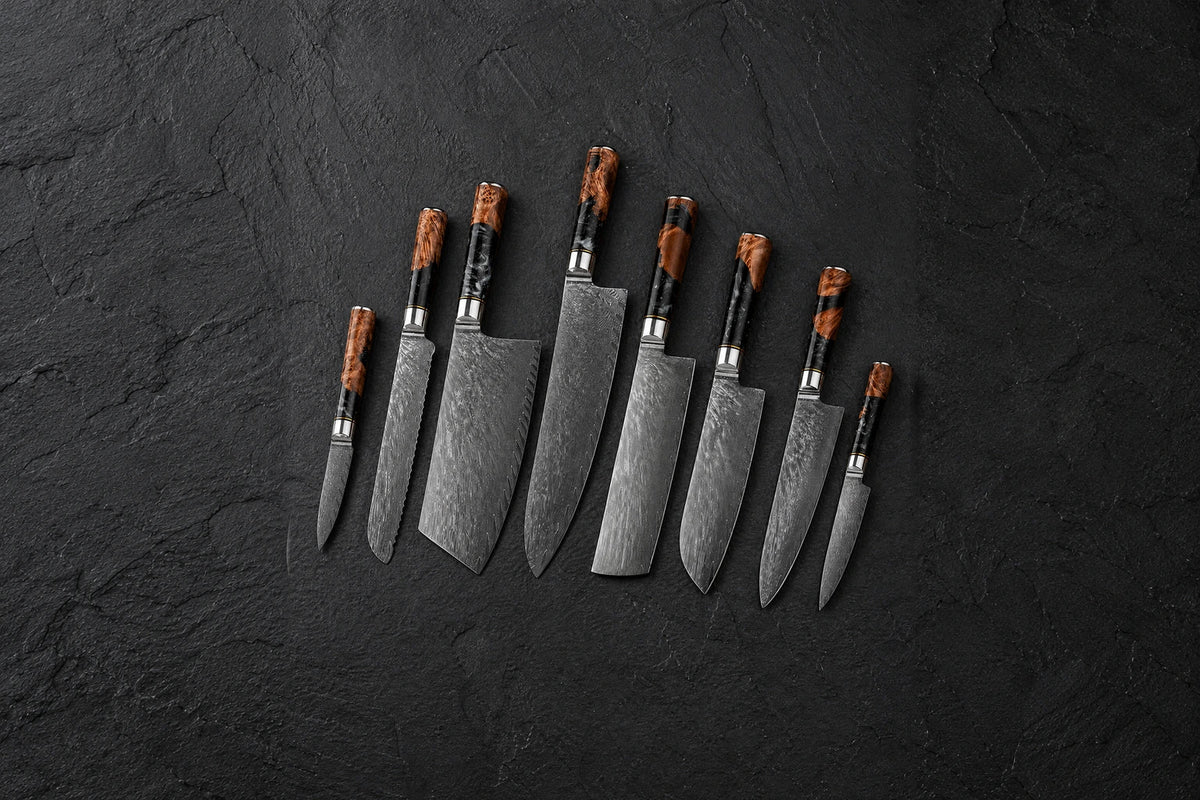
The Timber Series includes a 5 inch Utility option. It sits between the series' 3.5 inch Paring and larger chef options, giving you a specific smaller role to assess for a mushroom side, pasta dish or breakfast preparation.
Describe the finished pieces first
Start with the recipe's request. Whole pieces, slices and roughly chopped portions create different preparation lists. If the mushrooms are to remain in larger pieces, the knife may have only a small role. If the dish calls for repeated slices, the main question becomes how comfortably the chosen blade works across that sequence.
Consider whether you want similar-looking pieces or a deliberately rough chop. This is about the dish you are making, rather than a promise that one knife produces a particular result. Establishing the aim keeps you from alternating between shapes simply because the mushrooms differ in size.
A modest board can accommodate this task well when it remains clear. Set a receiving dish nearby and work with the amount that fits comfortably, rather than filling every available corner before beginning. The space left for preparation is more useful than a display of several unused knives.
What the utility option adds
The Timber 5 inch Utility gives you a named alternative to the larger chef profiles. If you want one smaller knife for several board-based detail jobs, that role may matter more than owning a dedicated tool for each ingredient.
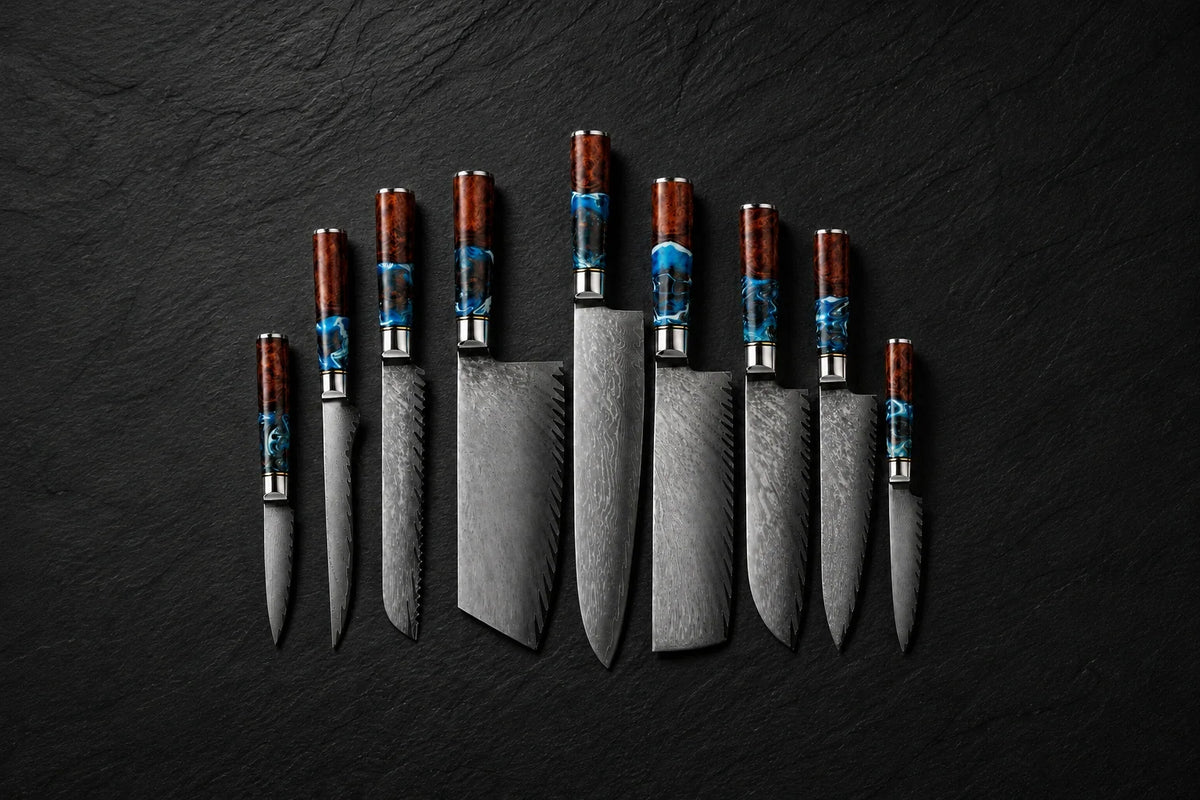
The Harbor Series also lists a 5 inch Utility option. Compare the actual profile and handle presentation between the two ranges if the same role is what you need. Their common option name does not mean that every aspect of their feel or geometry is identical.
Timber lists maple burl wood and composite resin for its handle; Harbor lists natural hardwood and composite resin. These are useful product-specific details when choosing the presentation you prefer. They do not establish which knife will feel best in your own hand or which one makes mushroom preparation faster.
When the smaller role stops answering the job
If you regularly prepare several ingredients in larger quantities, consider how mushroom work fits that wider routine. You may already own a larger knife you find manageable for repeated slices. In that case, the question is whether a utility option adds a missing role elsewhere, rather than whether it is compulsory for mushrooms.
A paring role is another separate choice. Small details may prompt that comparison, but repeatedly switching to a shorter blade does not automatically improve a board task. Our utility and paring comparison explores the smaller-role decision in more detail.
Keep the purchase tied to your routine
Imagine the next three mushroom dishes you are likely to prepare. Are they a small garnish, a side dish and a larger mixed meal? If the same smaller role appears repeatedly, you have a clear reason to compare utility options. If the jobs vary widely, begin with the preparation knife you already use comfortably.
Browse the KIRU Knife Series by option name. A useful addition earns its place through the ordinary jobs you repeat, rather than through a claim that every ingredient needs a new blade.


Leave a comment
This site is protected by hCaptcha and the hCaptcha Privacy Policy and Terms of Service apply.