
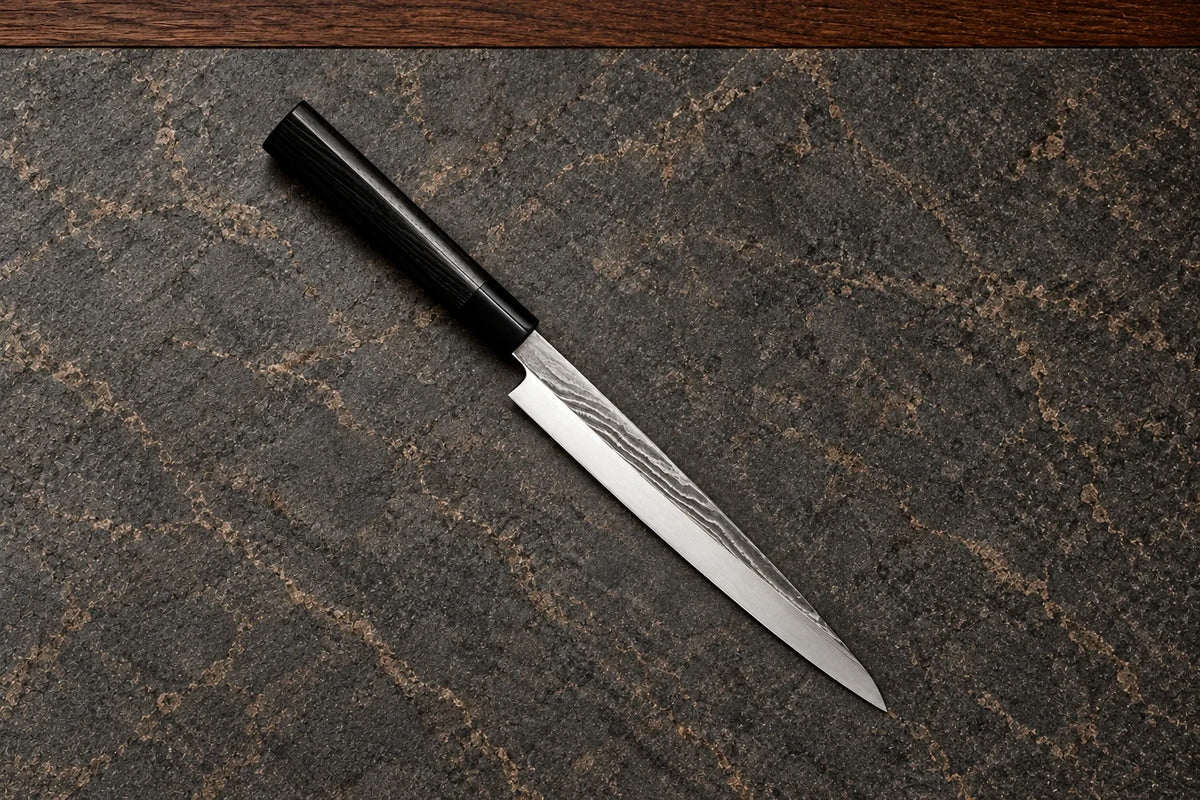
The sushi knife vs chef knife question becomes clearer when you separate preparing fillings from making dedicated slices. A cooked or vegetarian sushi meal can involve small vegetable pieces, bowl ingredients or filled rolls. Those jobs do not automatically require the same knife, or a new specialist tool.
The Onyx Sushi Knife is described by KIRU as a long yanagiba-style slicing profile, with a listed blade length of 22.5 cm. Compare that defined slicing role with the everyday preparation tasks you need to complete first.
Start with the format you want to make
Japan Centre's guide covers rolls, hand rolls and rice bowls. Choose the format before comparing knife roles.
If the meal is built around a bowl, your main knife work may be preparing the vegetables and portioning cooked ingredients. A dedicated long slicer does not automatically add a role to that arrangement. The food can be assembled without a final filled-roll slicing stage.
For example, vegetable pieces for a bowl belong to ordinary preparation, while dividing an assembled roll creates a later serving job. Keep those stages on the list separately, even if you plan to use an existing knife for both.
If you plan filled rolls, separate the filling preparation from the later portioning job. KIRU explicitly includes sushi rolls in the use description for the Ebony Sushi Knife. Onyx is described for fish slicing, so compare those stated roles before choosing a specialist profile.
Ordinary preparation still has a place
The Indigo Gyuto is presented as an all-purpose profile for slicing, chopping and dicing. It provides a comparison when the work is mixed vegetable preparation and other ordinary board-based tasks.
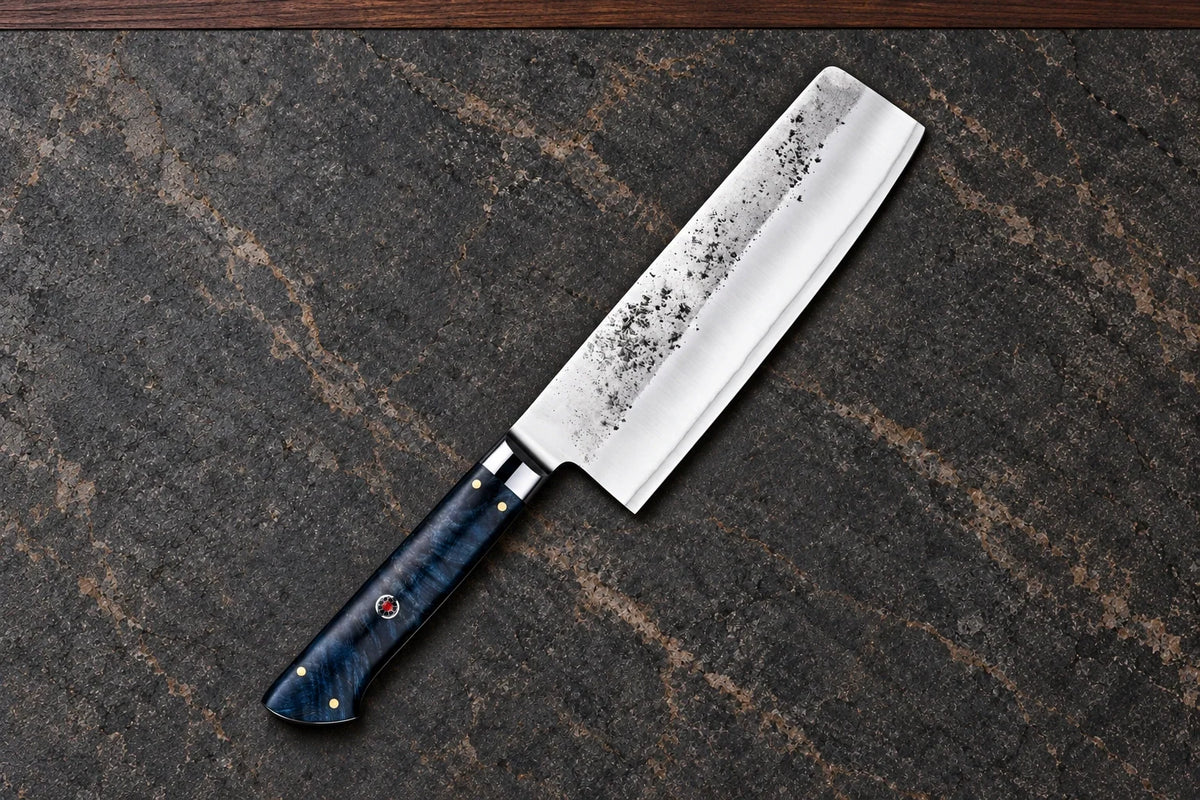
For a predominantly vegetable task, the Indigo Nakiri has a tall, straight profile intended for push-cuts. Consider it for the preparation role itself, without expecting that role to include every later serving cut.
Choose between those ordinary preparation roles according to what you repeat outside sushi meals as well. A tool used for soup vegetables, sides and everyday lunches may answer a different gap from a specialist slicer reserved for a narrower task.
Where the dedicated slicer fits
A long slicing profile is worth comparing when the fish-slicing stage described for Onyx is the job you want to add. That is a different stated purpose from portioning a filled roll. Its listed dimensions can help you think about the board space required, while the actual task determines whether that space is worth reserving.
KIRU lists a wood handle and an ambidextrous orientation for Onyx. The yanagiba-style description should not be expanded into an assumed single bevel or a particular sharpening angle. Those are separate product details, not automatic consequences of the profile name.
Choose the gap rather than the label
Imagine the meal from start to table. Identify the ingredient cuts, the assembly stage and any final slices. If your present preparation knife covers the ingredient work, ask whether there is genuinely another recurring job that needs a different profile.
This approach is especially useful for cooked or vegetarian meals, where the choice can remain centred on the cutting task. A knife's name does not decide which ingredients belong in the dish or provide food-handling instructions.
Browse the KIRU Sushi Knives when a dedicated slicing role is the gap you have identified. If the gap is everyday vegetable preparation, start with that instead. The useful choice follows the actual meal.


Leave a comment
This site is protected by hCaptcha and the hCaptcha Privacy Policy and Terms of Service apply.