
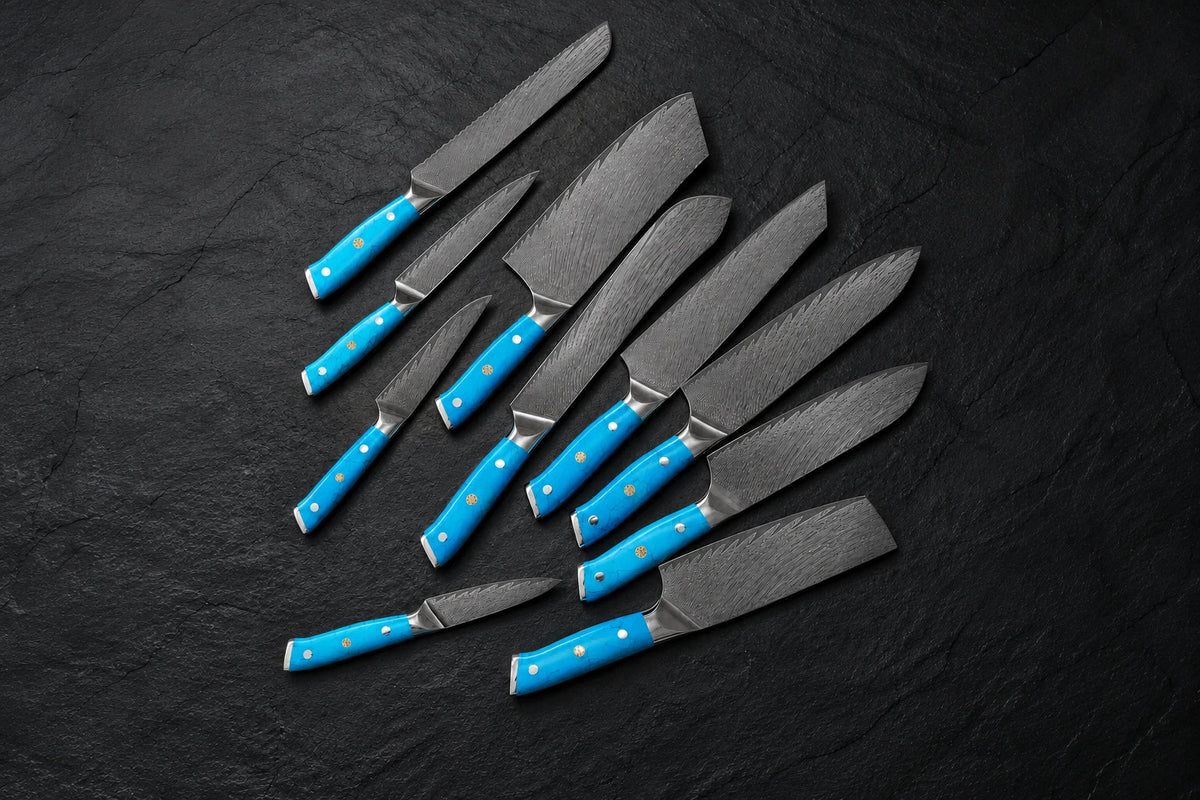
A bread knife for dinner table prep should answer the loaf-serving job, rather than be chosen as an afterthought among the vegetable tools. The loaf, the intended portions and the space at the board give you a useful starting point. Keep that task distinct even when it forms a small part of a larger meal.
The Lagoon Damascus Series includes an 8 Inch Bread option. It is a selectable profile within the range, alongside other named roles, and should be inspected as that particular option when bread serving is the job you want to add.
Decide how the bread will be served
A loaf for shared slices creates a different arrangement from bread already portioned for the table. Before setting out a knife, decide whether slicing is required and how the finished portions will be presented. You may need a serving basket or plate as much as you need another blade.
Consider the loaf's dimensions and the portions you intend to make. A compact loaf and a broader one occupy the board differently. Avoid treating the number of guests as a complete guide to knife length; the food in front of you matters as well.
Keep the serving aim simple. Similar-sized slices might be useful for a shared accompaniment, while another meal calls for a more varied presentation. That decision comes from the occasion, rather than a product promise about perfectly equal slices or reduced crumbs.
Compare named bread options
Lagoon's 8 Inch Bread option gives you one specific profile to consider. The Timber Series lists a 7.5 Inch Bread option, providing a second comparison when you are choosing this role.
The two length labels are helpful starting information, but they do not establish identical edge geometry or handling. Inspect the current selected option and its presentation before deciding which one belongs in your setup. The general series description should not be read as a detailed drawing of every blade.
Lagoon lists a stabilised turquoise stone handle, whereas Timber lists maple burl wood and composite resin. Once the bread-serving role is settled, you can compare the material presentation you prefer. The finish can sit comfortably within your kitchen's overall look without becoming the reason to choose an unsuitable preparation role.
Keep the loaf station separate
Plan where the bread will be portioned in relation to the rest of dinner preparation. A board already covered with vegetables and receiving bowls does not become a useful loaf-serving area simply because you place a different knife beside it.
Give the loaf, knife and serving dish room, and remove items that belong to completed preparation stages. This keeps the bread job easy to understand: the unportioned food, the cutting area and the destination for the finished pieces.
For a broader look at that role, see our bread-knife and straight-edge comparison. It can help you decide whether a separate loaf tool answers a real gap in the knives you already own.
Choose for your usual table
If serving a loaf is a regular part of meals at home, the bread role may earn a permanent place. If bread usually arrives already portioned, consider how often you would use the addition before buying it.
Explore the KIRU Knife Series by exact option. Choose the profile for the loaf task, then plan where it will live between meals. A useful table setup begins with clear roles rather than expecting one knife to answer every preparation job.


Leave a comment
This site is protected by hCaptcha and the hCaptcha Privacy Policy and Terms of Service apply.