
A knife for slicing cooked roast should be chosen for the serving job, the food's shape and the space available. Portioning a cooked, boneless piece at the board is different from the preparation that happened earlier. Decide how you want to serve it before reaching for an additional knife.
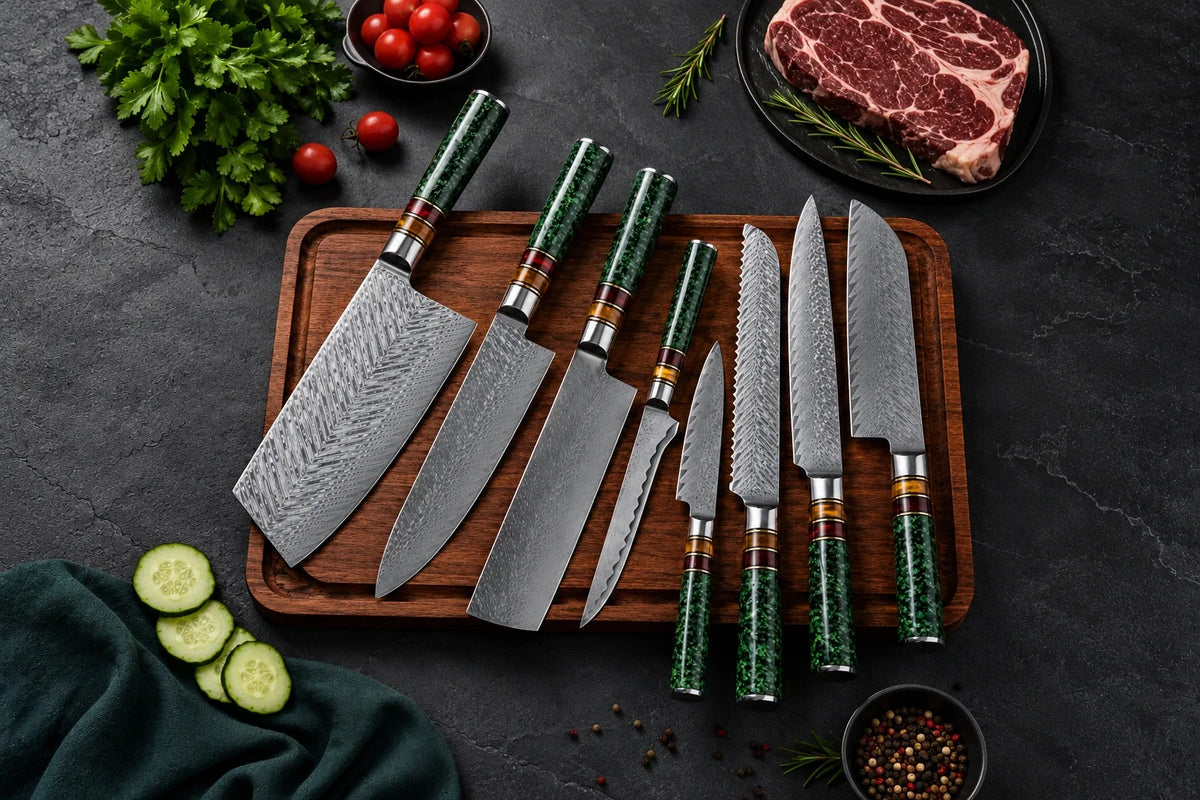
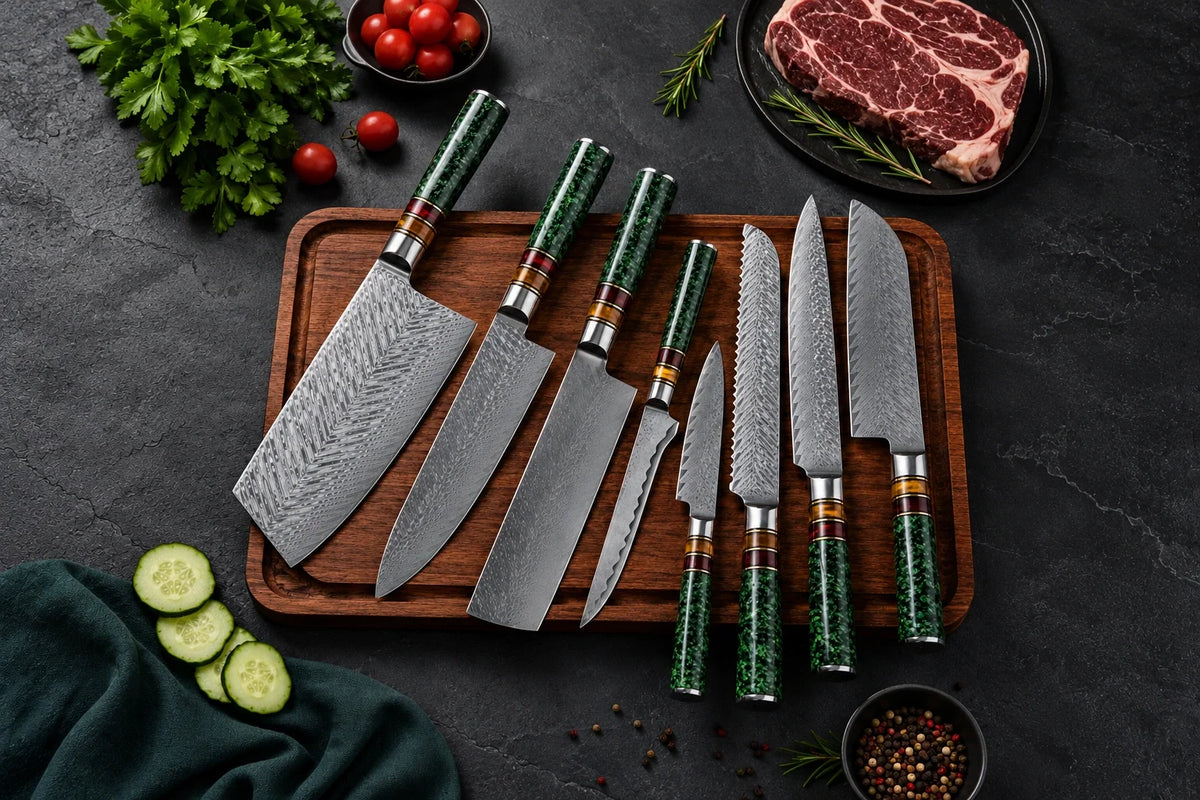
The Emerald Damascus Series offers a 7.5 Inch Slicing option. That named role provides a focused comparison if serving slices is a recurring part of your cooking, rather than an occasional task your existing knife already handles comfortably.
Picture the serving portions
Think about what will arrive at the table. Individual slices, smaller pieces for a shared platter and portions for sandwiches create different aims. The knife choice should follow that intended presentation, not an assumption that every roast needs the same blade.
Consider the size of the cooked piece as well as the number of diners. A small dinner may still involve a broad piece that needs a generous working area. Conversely, several modest portions can require careful organisation without calling for the longest knife in the range.
Decide where the completed portions will go. A platter positioned beside the board allows the serving task to have a clear beginning and end. It also keeps the cutting area from becoming the place where every finished slice waits while you work on the next.
Compare a slicing role with your usual knife
The Emerald 7.5 Inch Slicing option is a different selection from its 8 inch Chef option. Compare those roles in the context of your routine. A slicing designation may be relevant when that is the particular job you want to add; it is not proof that your current preparation knife must be replaced.
The Harbor Series offers chef options at 8 inch and 9.5 inch. These can be considered if you are looking for a broader preparation role rather than a specifically named slicing addition. Choose the actual profile you want to inspect, rather than assume all options in either series share one shape.
Handle presentation is a secondary comparison. Emerald lists a resin chaff handle; Harbor lists hardwood and composite resin. You can consider the visual finish you prefer without treating either material as a promise about the result of a serving cut.
Give the serving board room
Arrange the board for the actual cooked piece, the knife and the receiving platter. Leave room around the food for controlled handling rather than moving through a cluster of serving bowls. The useful arrangement is one in which each item has a purpose and does not compete for the cutting area.
That space decision comes before choosing additional blade length. Our guide to chef-knife length and board space explores why a larger option should be considered alongside the room needed to use it.
Add a role you will repeat
If you often serve cooked boneless roasts, a named slicing option may have a clear place in your kitchen. If the task is occasional, begin by considering whether a knife you already control comfortably answers it. A collection does not improve simply because it has a separate item for every meal.
Browse the KIRU Knife Series with your serving task in mind. Choose for the intended portions and the usable board space, then keep the rest of the table arrangement separate from the cut itself.


Leave a comment
This site is protected by hCaptcha and the hCaptcha Privacy Policy and Terms of Service apply.