
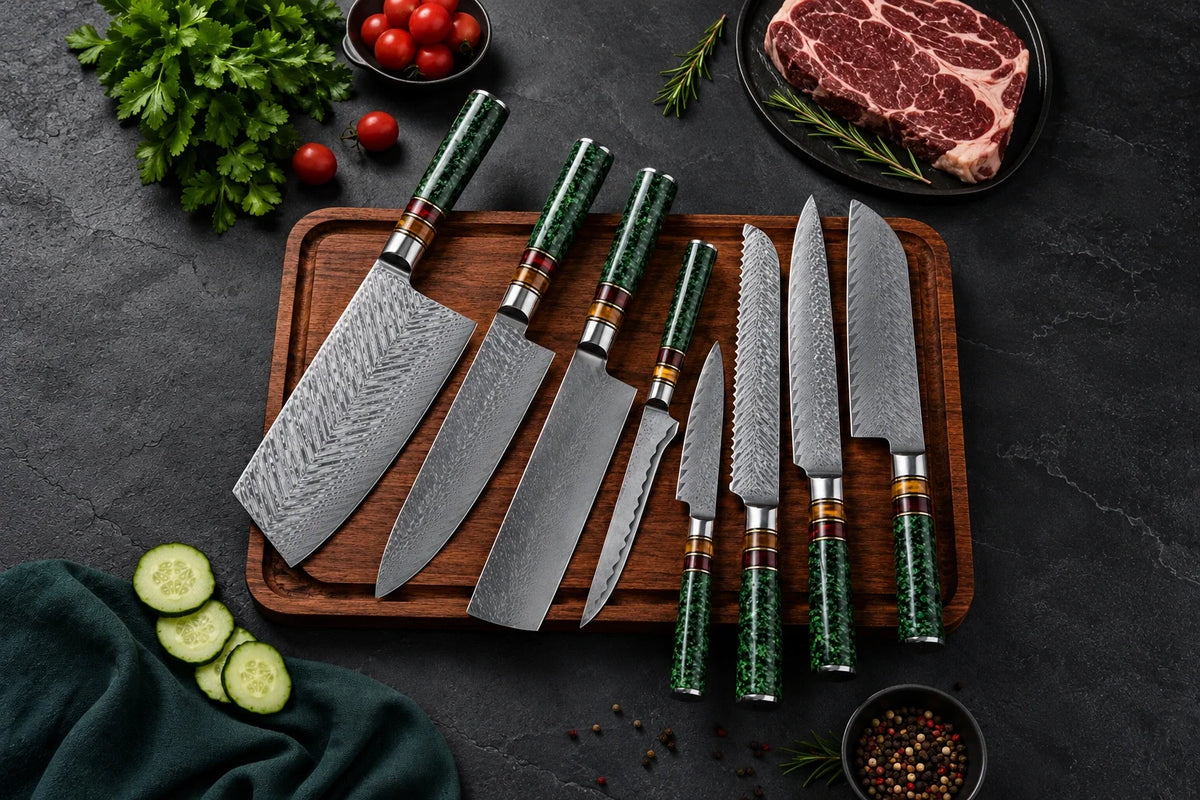
Considering a boning knife for boneless meat trimming begins with a defined preparation job. The word boning describes a knife role; it should not be treated as permission to cut through bone. If your recipe calls for modest trimming on a boneless piece, compare the named option with the preparation tools you already use.
The Emerald Damascus Series includes a 6 Inch Boning option. It is a separate selection from the series' utility, chef and slicing options, which makes choosing the exact profile more useful than shopping by the range name alone.
What needs to change before cooking?
Read the recipe's preparation requirement before choosing another knife. Trimming a specific area, making portions and slicing for serving are different jobs. You might need a detail role for one stage and a broader preparation role for another, but neither should be assumed from the ingredient alone.
Write the task in one sentence: a small amount of trimming on a boneless piece before following the recipe. That is a clearer buying prompt than wanting a knife for all meat preparation. It also prevents a new tool from being expected to solve tasks outside the role you intended.
If no trimming is required, there may be no reason to add a boning option for that meal. A useful knife collection reflects the work that recurs in your kitchen. Occasionally encountering a recipe with a new step is a reason to understand the step before expanding the collection.
Compare the actual boning options
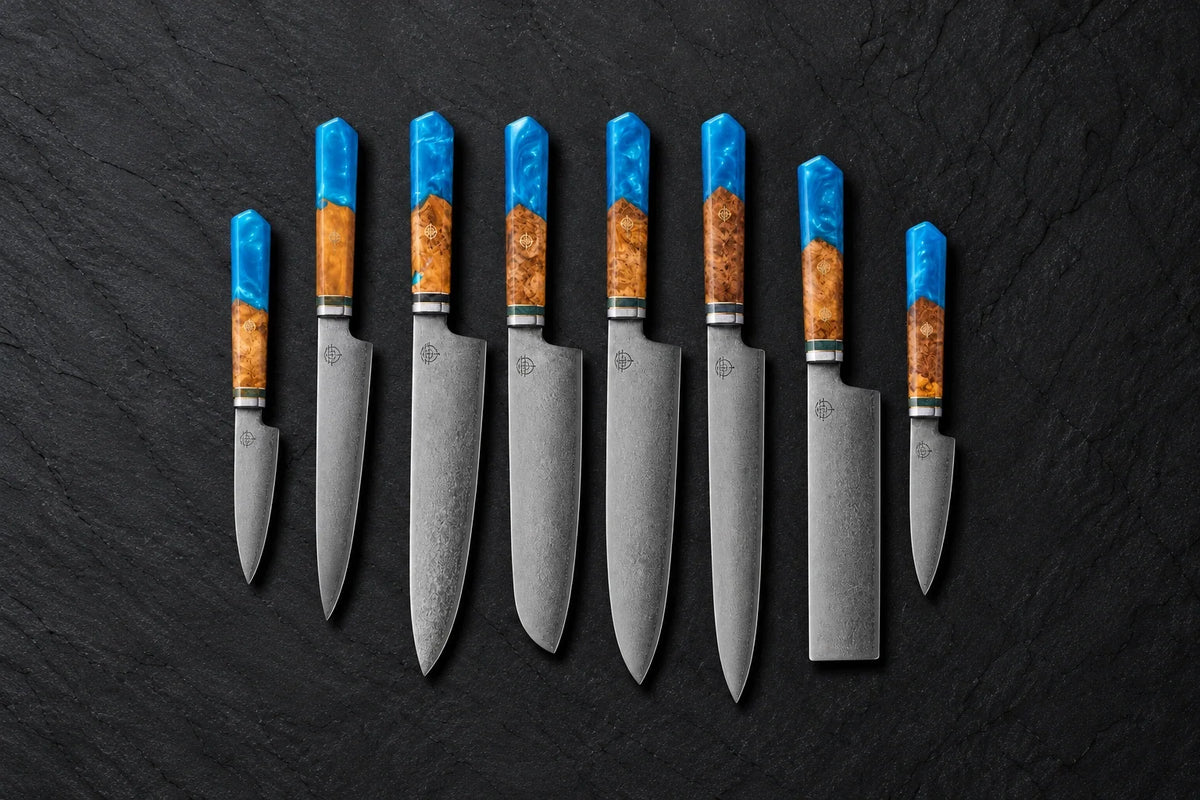
Emerald's 6 Inch Boning label identifies the option to inspect. The Timber Series also includes a 6 Inch Boning option. A shared role and length label make them relevant comparisons, but they do not establish identical blade geometry or handling.
Emerald lists a composite resin chaff handle, while Timber lists maple burl wood and composite resin. These details can help you compare the presentation you prefer. Decide the preparation role first, then consider the handle and appearance as part of that specific choice.
Do not assume flexibility, a particular tip shape or a cutting method from the option name. Those details matter if your intended job depends on them. Inspect the current product information and seek appropriate guidance for the preparation method rather than treating a familiar knife label as a complete instruction.
Keep trimming and portioning separate
A detail-focused trimming job is not the same as repeatedly making larger portions. Ask where each job will happen on the board and which tool you find manageable for it. An existing preparation knife may already cover the broader work, leaving the new option to answer a smaller gap.
This distinction can be especially useful when comparing an individual knife with a whole set. Before adding several pieces, list which preparation roles are genuinely missing. Our guide to choosing a series variant explains why the option matters more than an umbrella product name.
Make the addition purposeful
Think about the boneless meals you cook repeatedly, rather than a single unfamiliar recipe. If a defined trimming task appears often and your current knife does not feel convenient for it, the boning role is worth a closer comparison. If the task is rare, learning the preparation requirement may be the more useful first step.
Explore the KIRU Knife Series by named option. Choose a specific role for ordinary food preparation, with enough board space and a clear place to store the tool after the meal.


Leave a comment
This site is protected by hCaptcha and the hCaptcha Privacy Policy and Terms of Service apply.