
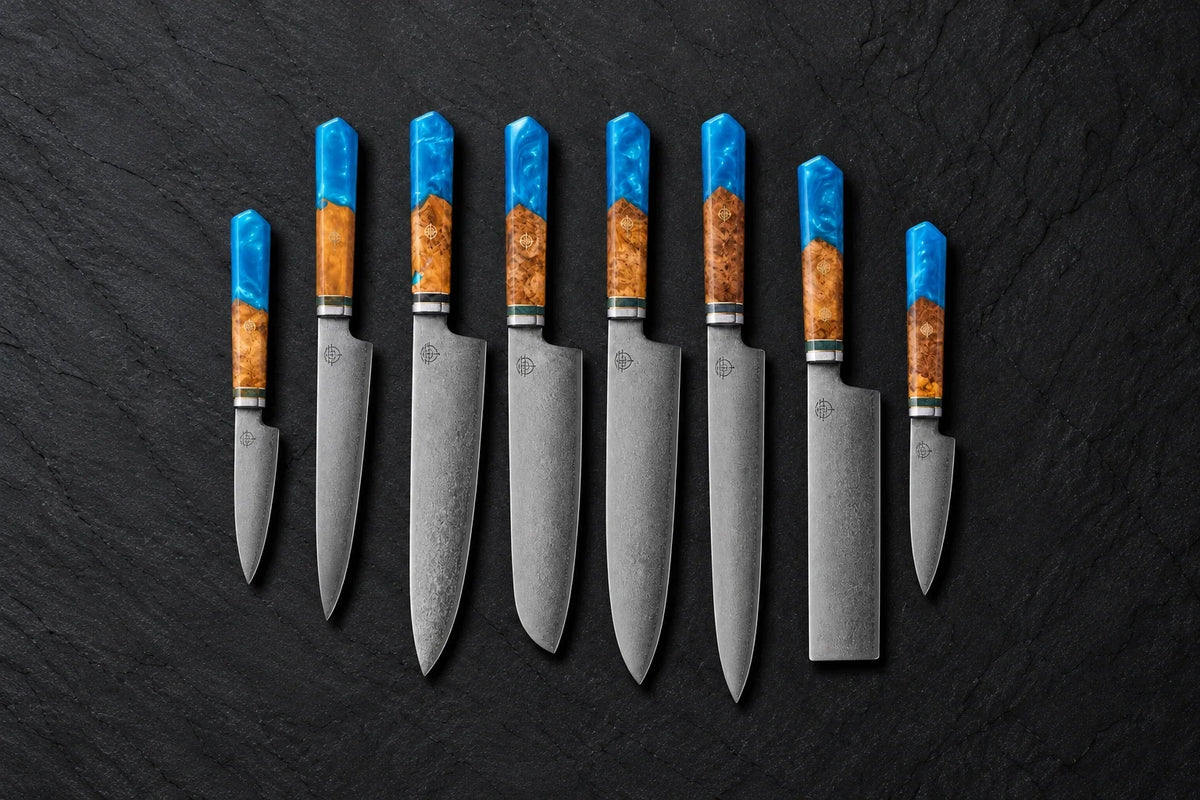
The chef knife vs utility knife decision is about the work in front of you, rather than how many people are eating. A smaller dinner can still involve a broad vegetable-prep task, while a larger meal may include modest detail jobs. Choose the role first, then consider the amount of blade that feels manageable.
The Azure Series includes 5 inch Utility and 8.5 inch Chef Knife options. They give this comparison a specific starting point: two selectable preparation roles within one range, rather than a claim that one size answers every dinner.
List the jobs for tonight
Imagine a meal with a vegetable side, a small garnish and a cooked ingredient to portion for serving. List those preparation jobs separately. The vegetable task might involve repeated board cuts; the garnish may need only a few smaller pieces. Quantity and shape both belong in the decision.
Current UK cooking coverage offers a useful context. The Happy Foodie's autumn 2026 series page centres on quick weekday dinners. Here, the useful question is which preparation role your own dinner actually requires.
For example, a few garnish pieces and a larger courgette portion can belong to the same small dinner. The first suggests a detail role; the second asks you to assess the broader board task.
There is no need to attach a promised meal time to the knife choice. A clear list can help you decide what to set out, but cooking involves ingredients, methods and the rest of your kitchen arrangement as well.
When to consider the utility role
A utility option is worth comparing when much of the work is smaller board-based preparation. You may want a modest knife for a small quantity of vegetables or a detail task alongside a larger tool you already own.
Azure's 5 inch Utility is one named option; the Timber Series also offers a 5 inch Utility. Compare the individual roles and presentations if you are filling that particular gap. A shared length label is useful information, but it does not establish identical geometry or an identical feel.
Our mushroom-prep guide gives a narrower example of this decision. A handful of smaller ingredient jobs can justify a utility role without making it the default for every cut on the menu.
When to consider the chef role
A chef option may be the more relevant comparison when the meal involves several broader preparation jobs and you want one main knife for that work. Consider the ingredients' dimensions as well as their total quantity. A large piece for a small dinner can still require a usable cutting area.
The 8.5 inch Chef Knife label tells you which Azure option to inspect. It does not mean that a longer blade is always easier to control. Make room for the knife, the ingredient and the finished pieces, rather than judge suitability from portion count alone.
One role now, another later
If your existing chef knife already covers the broader work comfortably, a utility addition should answer a smaller missing task. If you are choosing a main preparation knife first, start there and let later purchases respond to the jobs you discover you repeat.
Browse the KIRU Knife Series with tonight's preparation list in mind. A purposeful choice could be a chef profile, a utility profile or retaining the knife you already use well. The useful outcome is a role you understand and a board arrangement that leaves room to work.


Leave a comment
This site is protected by hCaptcha and the hCaptcha Privacy Policy and Terms of Service apply.